Hello All!
This is your refresh and resource page for the Spring Forward book club Zoom series, paving the path to the LIVE Spring Forward event on Saturday, 4/13/24, that many of you plan to attend.
SESSION FIVE – Wednesday, 3/13/24
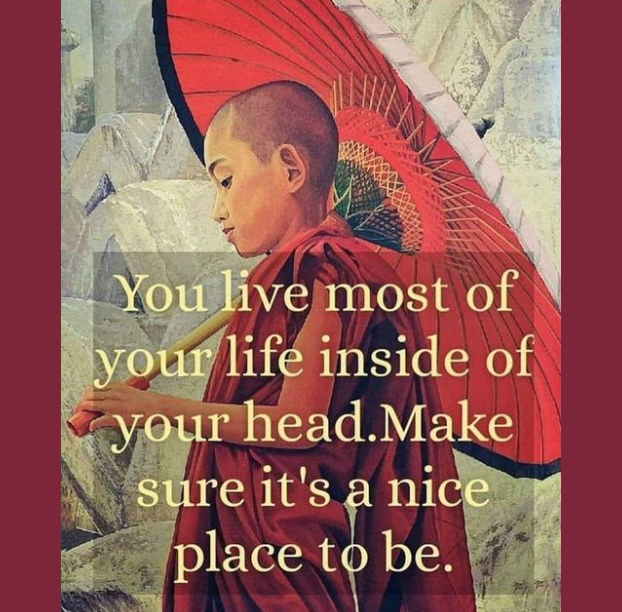
In this final session before the live Spring Forward gathering on Saturday, 4/13, we explored some new concepts about thinking vs. feeling, the role the head and the heart play in day-to-day living.
Please enjoy Session Five of Michael Singer’s Living From a Place of Surrender Course
The following offering by mindfulness educator, Wendy Heckart, serves as both a poem and a practice:
Practice: Heart Space: A Meditation Poem
May you see that the crack in your heart
Is a way for your light to push on through.
Know there is nothing broken,
Your heart is simply opening
To illuminate the beauty of your truth.
Heart space. Breathe. Deep. Listening.
Heart space. Breathe. Release. Listening.
May you find the courage to rest in the unknowing,
Curiously aware of the moment unfolding,
Even as the mind gets lost in story after story.
Perhaps you grasp onto anything
Because it feels as if the ground is moving
All the while you are standing still.
Heart Space. Breathe. Deep. Listening.
Heart Space. Breathe. Release. Listening.
May you find time to sit at the altar of your heart
Where you light reveals the shadows that lurk.
With compassion as your guard,
The breath as your guide,
Take a closer look,
Be kind with what you find.
And in due time,
Let them dissolve into your
Loving awareness.
Heart Space. Breathe. Deep. Listening.
Heart Space. Breathe. Release. Listening.
SESSION FOUR – Wednesday, 2/7/24
In the 2/7 gathering, we continued our exploration of Michael Singer’s work; The Untethered Soul, The Surrender Experiment, Living Untethered, and the online course, Living From a Place of Surrender.
In particular, Session 3 (The Mind) of Michael’s online course, Living From a Place of Surrender, is perhaps the most pertinent to our Spring Forward Course material and upcoming retreat on April 13.
For that reason, I am whole heartedly sharing the entire 1hr 15min session with you here:
Poem
I was the type of person
That held onto things too tight
Unable to release my grip
When it no longer felt right
And although it gave me blisters
And my fingers would all ache
I always thought that holding on
Was worth the pain it takes.
I used to think in losing things
I’d lose part of me too
That slowly I’d become someone
My heart no longer knew.
Then on day something happened
I dropped what I had once held dear
But my soul became much lighter
Instead of filled with fear.
And it taught my heart to some things
Aren’t meant to last for long
They arrive to teach you lessons
And then continue on.
You don’t have to cling to people
Who no longer make you smile
Or do something you’ve come to dislike
If it isn’t worth your while.
That sometimes the thing you’re fighting for
Isn’t worth the cost
And not everything you ever lose
Is bound to be a loss.
~e.h.
SESSION THREE – Wednesday, 1/17/24
This week, our community came together to practice meditation, connect, support one another, and review the highlights and concepts from Michael Singer’s most recent book, Living Untethered, which I would highly recommend you add to your reading library.
Surrender and Letting Go are certainly the themes of this series of gatherings leading up to the Spring Forward event on 4/13.
In his newest, and arguably most powerful book yet, Michael Singer lays out the blueprint for living a life of joy, which he insists is our default, once we find our true seat of awareness, from which to view the experiences coming in from the outside world, the thoughts and emotions created from that outer world, and the emotional content of the heart.
From a book review:
Living Untethered provides clear guidance for moving beyond the thoughts, feelings, and habits that keep you stuck—so you can heal the pain of the past and let your spirit soar. On each page, you’ll discover a deeper understanding of where your thoughts and emotions come from, and how they affect your natural energy flow (shakti). Finally, you’ll find freedom from the psychological scars, or samskaras, that block you, and keep you from reaching your highest potential.
From the book:
It is important to understand that every external event is the expression of all the energies that have come together to create that event. When this flow of the event’s energy comes into you (from the outside), it must make its way through your mind and heart, and then ultimately merge into your consciousness. When you use your will to block an experience from passing through, the flow of energy has to find a way to keep moving. Energy can’t stand sill. Energy is power, and when it hits the resistance of your will, it is forced to circle around itself. That’s the only way energy can stay in one place. The circle is such a powerful form in creation. It allows something to keep moving yet stay stationary. The is how samskaras are formed. These stored patterns from the past keep trying to release, but you keep pushing them back down, either consciously or unconsciously.
PRACTICE: I invite you participate with this 12-min guided video, designed to deepen your understanding of how it FEELS to let go – to surrender.
12-MIN. VIDEO MEDITATION PRACTICE: THE SURRENDER STRETCH
POEM
Joy in Life by Thich Nhat Hanh
You must be completely awake in the present
to enjoy the tea.
Only in the awareness of the present,
can your hands feel the pleasant warmth of the cup.
Only in the present, can you savor the aroma,
taste the sweetness, appreciate the delicacy.
If you are ruminating about the past,
or worrying about the future,
you will completely miss the experience
of enjoying the cup of tea.
You will look down at the cup, and the tea will be gone.
Life is like that.
If you are not fully present,
you will look around and it will be gone.
You will have missed the feel, the aroma,
the delicacy and beauty of life.
It will seem to be speeding past you.
The past is finished.
Learn from it and let it go.
The future is not even here yet.
Plan for it,
but do not waste your time worrying about it.
Worrying is worthless.
When you stop ruminating about
what has already happened,
when you stop worrying about
what might
never happen,
then you will be in the present moment.
Then you will begin to experience joy in life.
Thich Nhat Hanh
SESSION TWO – Wednesday, 12/13/23
Our 2nd Session gave us a chance to connect, engage in practice, and ponder the concepts of the book, THE ART OF LETTING GO, by Nick Trenton.
POEM
Look to this Day,
for it is Life – the very Life of Life.
In its brief course lie all the verities
and realities of your existence
the Bliss of Growth,
the Glory of Action,
the Splendor of Beauty.
For yesterday is already a dream
and tomorrow is only a vision;
but today, well-lived,
makes every yesterday a dream of happiness
and every tomorrow a vision of hope.
Look well, therefore, to this Day.
-by Kalidasa, Indian Sanskrit Playwright and Poet, Hindu Philosopher, 4 – 5th century A.D. (One of several translations from the original Sanskrit).
The Art of Letting Go by Nick Trenton
Stop Overthinking, stop negative spirals, and find emotional freedom
Your mind should be your safe zone, not the noisiest place in the world.
Letting go is the process of releasing attachment to something or someone.
Three Important Core Concepts:
The dichotomy of control
Nonjudgmental thinking
Self-Distancing
From the book:
“On one hand, the principle of dichotomy of controlS emphasizes the importance of focusing on what can be controlled, rather than worrying about the things that can not. This concept is especially useful when trying to navigate certain challenges or obstacles.
Meanwhile, nonjudgmental thinking encourages you to approach situations with an open and accepting mind, free from biases and assumptions.
Finally, self-distancing offers techniques for gaining a more objective perspective, particularly when dealing with emotionally-charged situations.”
These three concepts work in tandem to help you cultivate a more balanced and effective approach to problem-solving and decision-making.
The first of the concepts, the dichotomy of control is drawn from Stoic philosophy or Stoic(S)ism — the philosophy of Ancient Greece and Rome.
Epictetus, a Greek Stoic philosopher, wrote:
“Some things are within our power, while others are not. Within our power are opinion, motivation, desire, aversion, and in a word, whatever is of our own doing; not within our power are our body, our property, reputation, offie, and, in a word whatever is not of our own doing.”
How can you practice these concepts in real life?
The central concept of the book is the dichotomy of control:
- Cultivating a focus on the present moment
- Asking yourself in a given situation or circumstance, “Is this under my control”?
- If it is partially under your control, apply whatever can be applied now, and then let it go to the universe, the powers that be.
- If it is clearly not under your control, then the letting go is of that which you have determined doesn’t fall within the scope of your power.
Discussion: What does LETTING GO feel to you? Is it easy? Is it difficult? What makes it that way?
Sometimes it’s hard to determine if letting go is the right thing.
What are the implications for Letting Go of what is stale, holding you down or back? Affecting your work or home in a disempowering way?
Did you identify what you may want to let go of?
It can be something very minute, and it can also be something big/daunting.
Whatever the weight or intensity, the process is the same:
- observing/identifying the habit, belief, practice, person
- exploring how life might look if this disempowering roommate was no longer living under your room
- GIVING YOURSELF PERMISSION to let go
- Actively letting go…both in the moment, and during your practice
12-MIN LETTING GO PRACTICE
I’m willing to let go.
I’m ready to let go.
I let go.
BRAIN DUMP ACTIVITY – approximately 10 minutes (have paper/pen or computer to type notes)
The brain dump exercise is a simple and effective way to clear one’s mind and get organized. This activity allows you to put your thoughts and ideas down on paper (or, on screen), so that you can free up space in your mind and focus on what’s important.
First, write a sentence that will guide your thoughts.
For example, assume you are feeling overwhelmed with multiple tasks that need to be completed at work. Your guiding sentence might be, “What task would I focus on now”?
Start the timer and give yourself 10 minutes to write down all tasks that come to your mind. Record everything from small tasks, like writing an email, to big projects, like completing a report.
After 10 minutes of writing, you should have dumped all of the mental activity devoted to your work tasks.
Now, you’re in a position to organize this list according to priority and tackle the first one. All other tasks are on the paper (or screen) and no longer seemed jumbled in the mind.
The creator of the Brain Dump activity, David Allen, suggests keeping a brain dump journal, or computer file, so that you can come back and populate it each time the overwhelm begins.
A QUICK video/refresher for you before we proceed to Session 2:
SESSION ONE – Wednesday 11/15/23
Our first session gave us a chance to connect, engage in practice, and ponder the concepts of the book, REVERSE MEDITATION, by Andrew Holocek.
The following video provides a summary of our 11/15 session:
The audio meditation practice below is created using the 3-step process outlined in the book, Reverse Meditation. This practice works up from Step 1 to Step 3, where you then follow the OBEY acronym (see below), through your physical or emotional pain.
Between now and 12/13/23 (our next session), feel free to practice the Reverse Meditation method, with the guided audio, and then, perhaps, on your own (self-guided).
Step One:
Begin the practice with closed eyes and some moments of REFERENTIAL MEDITATION, bringing awareness to breathe, or body sensations. Keeping the attention on just one anchor, in order to settle the mind/body into the practice.
Step Two:
Easily move from the referential, to some moments of NON-REFERENTIAL MEDITATION or OPEN AWARENESS MEDITATION. You may wish to open the eyes slightly and soften your gaze to a point on the floor in front of you.
During this part of the practice, allow your attention to flow between all of the events in the present moment, i.e. breath, sensation, sound, visual and thoughts.
Step Three:
Moving now from open awareness, to REVERSE MEDITATION, for as long as it feels right for you.
NOTE: The author suggests at this point, bringing about some physical discomfort by either sitting in an unsupported posture (maybe lotus position?), or working with pains/aches you already feel in your body, or calling to mind a challenging emotional event from past or present.
THE STEPS IN REVIEW for the third part of the meditation: The reverse meditations represent four steps, or stages, in establishing a non dual relationship to pain (physical or emotional).
The acronym OBEY can be a way to remember the four steps:
Observe the pain, then Be with it; then Examine it; finally, Yoke or unite with it.
Step 1 is to briefly pull back from the pain and observe it. Step 2 is to be with the pain without running a commentary on it. Step 3 is to examine the nature of the pain. Step 4 is to yoke with the pain — to become one with it.
The nuance between steps 2 and 4, is that step 2 asks you to descend from the witnessing first step, and be with the pain. It’s still dualistic. Step 4 is to BE the pain.
Finally, here’s the complete poem I read on 11/15!
You are the Truth by Shanmugam P
Carrying the weight of the past in my head
And dragging the scenes which were old and dead,
I ran to grab the bliss of the future;
The more I ran, the more I found torture..
The torture of the hedonic treadmill
Followed me as I continued uphill;
I was caught in the prison of craving
With tedious thoughts, my mind was raving.
I met an ugly old man on the way
who had a long thick beard with shades of grey.
His face was shining with heavenly bliss;
In his eyes I saw an endless abyss!
“What makes you so happy in this rat race?”,
I asked him, as he slowly turned his face.
He replied,”The answer is within you!
The grand kingdom of God is within you!”
“That’s a joke”, I said “Are you kidding me?”.
“No!” He said, “Turn inward, you’ll be free!
You’ve made your boundaries inside your mind,
You’ve closed your eyes and become blind”.
I said, “How can I get out of this trap?
I want to find the way, give me the map”
He said, “You’re the way, the truth and the life!
Be still and know you’re that, and end your strife!
You’re not your body and you’re not your mind;
Not knowing the timeless truth makes you blind;
You’re not your story and you’re not your thoughts;
You’re not those age old, buried mental knots.
You’re not that chattering voice in your head;
You’re not anything that you did or said;
You’re not anything that you have, or know
You are the truth that is watching this show!
You’re not anything that can be perceived;
You’re not an object that can be observed;
You’re the screen where the world is being played;
You’re the emptiness where the form is made.
You’re the one witnessing the mind and breath;
You’re one without two, beyond birth and death;
Like the air trapped in a small round bubble,
You feel separate which brings all the trouble.
Inquire inside and wake up from this dream!
Let truth alone shine like a bright beam!
By inquiry, your illusions will begin to break;
You’ll stop mistaking the rope for a snake”
Hearing these words stopped my thoughts for a while.
Looking in, I slowly began to smile.
I watched my thoughts as they slowly passed by;
I observed my mind like a secret spy.
For years, I contemplated on his words;
I watched my thoughts fly like birds.
One day, I woke up and realized the truth;
Since then, my life has been peaceful and smooth.
 Mind Your Moments